
{主关键词}
今夜有戏
China’s youth turn to immersive disaster simulations to learn survival skills_我的网站

A | 北京时间8月10日,准者体育老板林晨耀直播聊起里夫斯,一番大实话,把不少球迷给整明白了。 正在进行中国行的里夫斯,和准者的合作大概率要走到头。
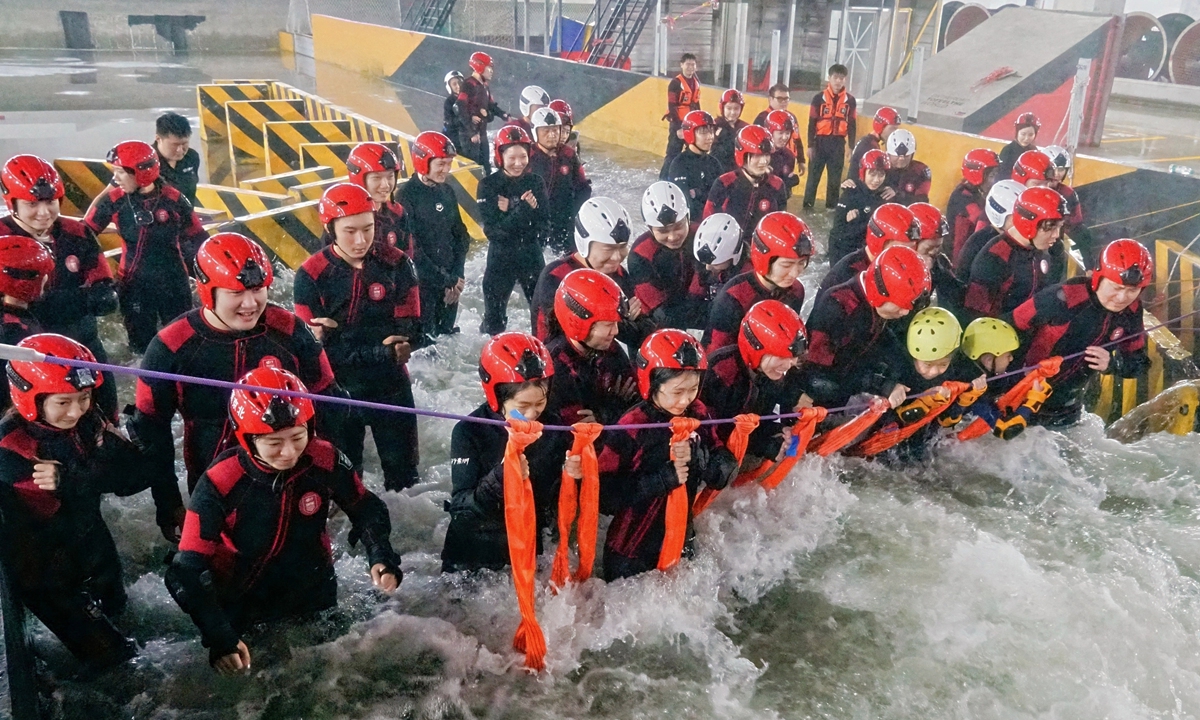
As heavy rain associated with Typhoon Dolphin continued to affect large parts of China, an increasing number of people were turning to immersive disaster simulations to experience extreme weather scenarios in a controlled environment at the Lvxing Disaster Simulation Training Center in Hangzhou, East China's Zhejiang Province.
At the country's first natural disaster simulation venue, adult participants pay 899 yuan ($133) per person to virtually confront situations such as typhoons, urban flooding and sudden flash floods, to gain a sense of what such emergencies might feel like.
Wang Kuanghan, operator of the training center, told the Global Times that the center is designed to allow people to experience the dangers of natural disasters in a safe and controlled environment, while raising awareness of the need to respect nature and avoid potential risks.
"We hope to pass on the experience we gained from encountering natural disasters during our years of traveling around the world," Wang said. "Beyond teaching people how to respond when natural disasters strike, what is more important is cultivating an awareness of how to avoid risks."
As of July, the center had received more than 70,000 visits this year for hands-on experiences, including tourists as well as companies and professional rescue teams that come for training. The number is higher than the same period in 2025, he noted.
Fu Minya, a Hangzhou-based office worker, told the Global Times that she has heard of the center and would like to give it a try.
"The frequent news reports of natural disasters in recent weeks have reminded people of how small and vulnerable we are in the face of nature's forces," she said.
After Typhoon Dolphin made landfall in China in early August, its remnant impact brought downpours to several provinces. Chinese authorities previously earmarked 80 million yuan to support flood and geological disaster relief efforts in the Central China's Henan and Hubei provinces and East China's Anhui Province, the Xinhua News Agency reported.
The flash flood simulation is one of the most intense experiences the center offers. Participants stand in a simulated river channel as an instructor presses a button, releasing around 500 tons of water from above. Within just three seconds, many participants are knocked off their feet, left tumbling in the rushing water and being swept toward the protective wall at the end of the channel.
"Real flash floods move even faster," said Wang. "When the water rises above knee level, it is almost impossible for an adult to remain standing. Many people instinctively think they should swim to escape, but that can be fatal."
Flash floods carry mud, branches and rocks that can quickly entangle your arms and legs. The right thing to do is to watch for warning signs of an impending flash flood, move away from the riverbank before the flash flood occurs, and quickly evacuate to higher ground on either side, he said.
In another exercise, several participants slog ahead holding each other's arms as the facility simulates winds reaching speeds of up to 165 kilometers per hour, as well as torrential rain.
However, there are concerns that simulated disasters could trivialize the suffering of disaster victims and turn the trauma of real-life disasters into entertainment.
This is a promising new niche in urban cultural tourism, Yu Jinlong, a Beijing-based cultural scholar, told the Global Times on Wednesday.
By striking the right balance between entertainment and public education while strictly adhering to safety protocols, such facilities can become more than just viral check-in destinations; they can serve as a replicable platform for public emergency education, Yu noted.
In the past, disaster-prevention education largely relied on display boards and lectures, which often made it difficult for people to develop an intuitive understanding of the dangers involved, Yu said.
Real-life simulations, by contrast, allow participants to experience firsthand the destructive force of typhoons and flash floods, turning abstract knowledge into tangible memories. This is where such facilities can offer unique social value, making them particularly suitable for educational programs for young people and emergency-response training for businesses and institutions, he said.
The experience can be impactful, but it should not be reduced to a sensationalist spectacle. Only by combining immersive experiences with practical self-rescue training and maintaining strict safety standards can this emerging model continue to serve as a meaningful platform for public disaster-prevention education, Yu noted.
Statistics show that 95 percent of people rescued from natural disasters survive through self-rescue, Wang said. "If you are swept away by water or hit by strong winds here, you will develop a much deeper understanding of how to respond to hazards and protect yourself."
。

B | 林晨耀在直播里毫不避讳,直接摊开现实问题:“明年他不一定会再来参加中国行了,没预算,实在没办法续。” “现在人家是5000万先生,多大能力干多大事。湖人是豪门,能给他开出五千万的年薪,我们品牌怎么可能拿得出500万美金的代言费?根本做不到。”林晨耀还表示,如果最后确实谈不拢,品牌就会转向签约其他NBA球员,不会死磕里夫斯。 说起来也挺有意思,准者算是很早就看上里夫斯的国内品牌。林晨耀回忆,当初刚签里夫斯的时候,他还只是湖人的替补球员,那时候代言费也就70万,属于非常划算的一笔签约。谁也想不到,短短几年时间,这个当初不起眼的替补,直接完成身价大飞跃。 今年休赛期,里夫斯正式和湖人敲定大合同,4年总金额大约1.85亿美元,直接摇身一变,成了联盟高薪球员,商业价值跟着水涨船高。 当初低价押中潜力球员,看着自己签约的球星打出身价,本来是件好事,但球星身价暴涨之后,品牌预算跟不上,续约就直接卡住了。

C | 不少球迷也感慨,这就是商业联盟最真实的一面。球员打出来,工资、代言报价全部跟着往上翻。准者当年眼光确实独到,可惜现在预算匹配不上里夫斯现在的级别。 至于后续,就看双方能不能找到折中方案,如果谈崩,那这次的中国行,可能就是里夫斯作为准者代言人最后一次国内亮相。
Current article:http://h4scq5.yepenchunshouzuiwai.shop/z9z/296r57o.html
Published on:01:59:43
- 64276 killed in Nigeria boat capsize
- 92524“曾小贤”回应了!网传《爱情公寓》即将回归
- 6483239台风“梅花”即将正面登陆宁波,在外海掀8.8米高狂浪_强台风逼近浙江海域掀起10米巨浪_台风“梅花”或将波及12省市
- 719夜市“快拆快复” 彰显治理的“服务思维”
- 725768据称,该应用很擅长立即播放世界杯赛事的势头,央视电视台正在起诉500万人的索赔。
- 784865小鹏汽车与华为乾崑展开合作?6月5日揭晓答案
- 789986凌晨,新疆哈密突发地震
- 5517世界机器人大会吸引多国业界人士与会共议全球协作路径,世界机器人大会吸引多国业界人士与会共议全球协作路径
- 356536这几种错误的充电方法 会严重影响手机寿命
- 5044163优地机器人通过港交所上市聆讯
- 1307362灵蛇启新年,平安待春来——杭州市文华学前教育集团2025年寒假通知及温馨提示
- 394Climate activist Greta Thunberg fined again for a climate protest in Sweden
- 7701952026 울산울주세계산악문화상 수상자와 함께하는 프로그램 다채
- 82205拜仁2027-28赛季主场球衣设计曝光:采用暗红色,并带有菱形暗纹
- 445访北京中关村AI原点社区:AI重塑创业方式 “一人公司”涌现,访北京中关村AI原点社区:AI重塑创业方式 “一人公司”涌现
- 4614253家门店一次性申报即完成全部备案 连锁品牌外摆可“一站式”审核!
- 547Exclusive: Naoero president, Chinese ambassador cycle island together passing China-supported projects, Chinese-run retail stores
- 994韦东奕下架练习册,四天销售额超100万元
- 37626郑凤荣逝世,她曾在北京跳过1.77米,成为我国首位打破世界纪录的女运动员
- 8971432国家喊话“涨工资”,开始了
- 276163OPPO新专利可用单独系统熄屏显示
- 237贝森特出手强压美债利率 城堡证券警告:搞“金融抑制”恐伤美元
我的网站热门国内
- Copyright @ 2016-2017 我的网站 版权所有